My Philippines Trip
Start a letter
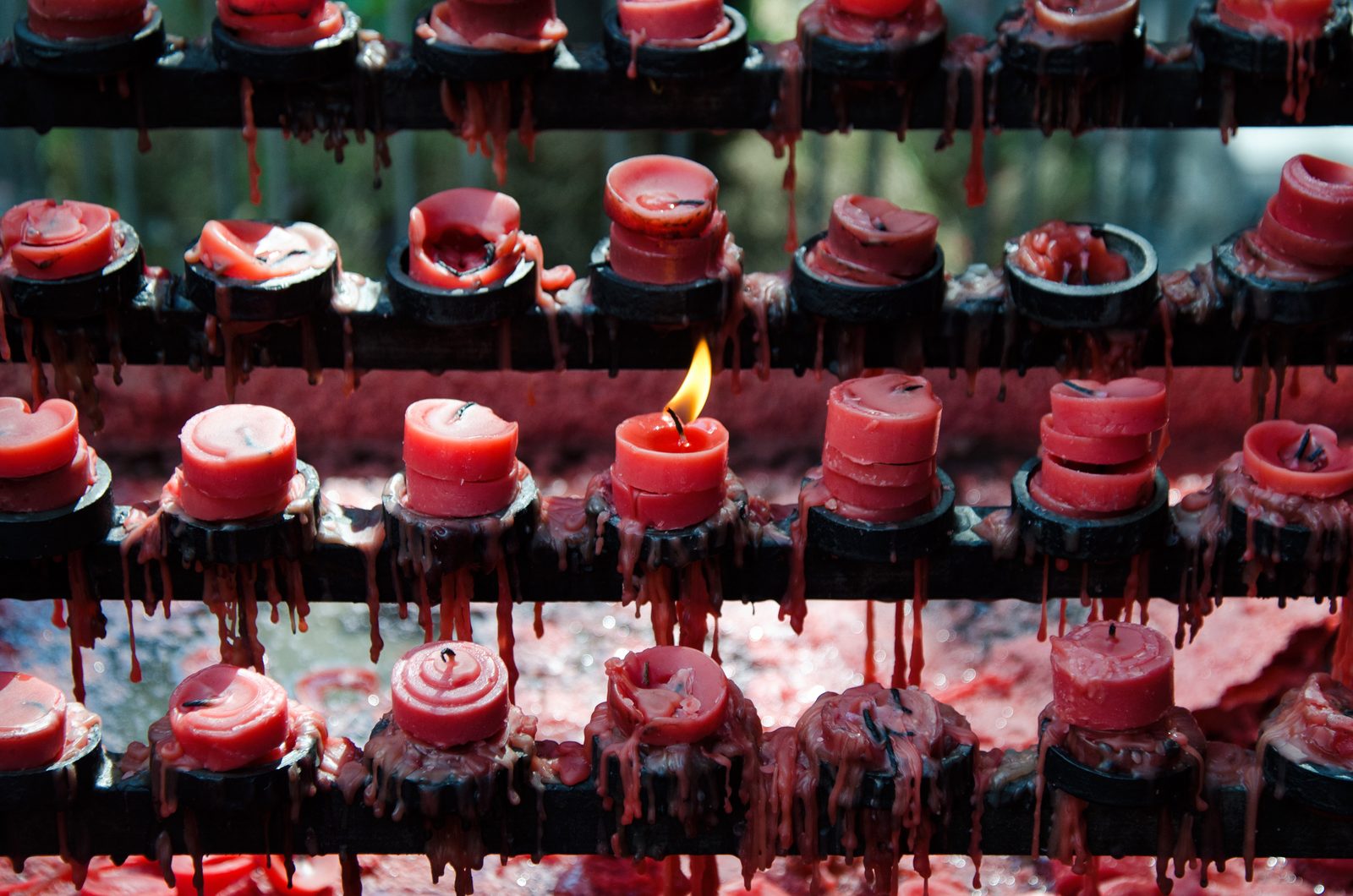
Racks of red devotional candles at the Basilica del Santo Niño, one flame alight, wax pooling below.
Origin / Sacred centre

Cebu

Cebu is where the Philippines you know begins. The Santo Niño was given here, the cross was planted here, the Spanish century started here. Most of what came after, came after.

In April 1521, Ferdinand Magellan’s expedition reached the harbour at what is now Cebu City. Within a week he had baptised eight hundred locals, given Queen Juana of Cebu a small wooden image of the Christ child as a baptismal gift, and planted a wooden cross on the shore. Seven days later he was killed by Lapu-Lapu’s warriors on Mactan, twelve kilometres east. The expedition sailed home without him. Forty-four years later, in 1565, Miguel López de Legazpi returned, founded the first Spanish settlement in the country, and the wooden Christ child given to Queen Juana was rediscovered, intact, in the burned remains of a hut. It is still there. The trip is built around going to see it.

You stay at Be Resort on Mactan, the island the airport sits on, and cross the bridges into the city for the middle day. Day 1 is arrival. Day 3 is breakfast and the airport. Day 2 is a full city day: the Basilica del Santo Niño in the morning, Magellan’s Cross beside it, the Cebu Heritage Monument at the old plaza, the Yap-Sandiego ancestral house, Fort San Pedro on the harbour, and Taboan dried-fish market. In the afternoon, the trip moves up into the hills above the city: Sirao Garden, the Temple of Leah, the Taoist temple, the 10,000 Roses Café, with a run down Colon, the oldest street in the country. The morning is what the trip is actually for. The afternoon is the rest of the day.

After Palawan, what Cebu offers is a city built on something. Not a beach. Not a landscape. A foundational moment that gave the country its name, its religion, its first colonial century. The basilica that holds the Santo Niño is the most-visited Catholic church in the Philippines; millions come every year, and most of them are Filipino. You will not be the only foreigner there, but you will be one of the very few.

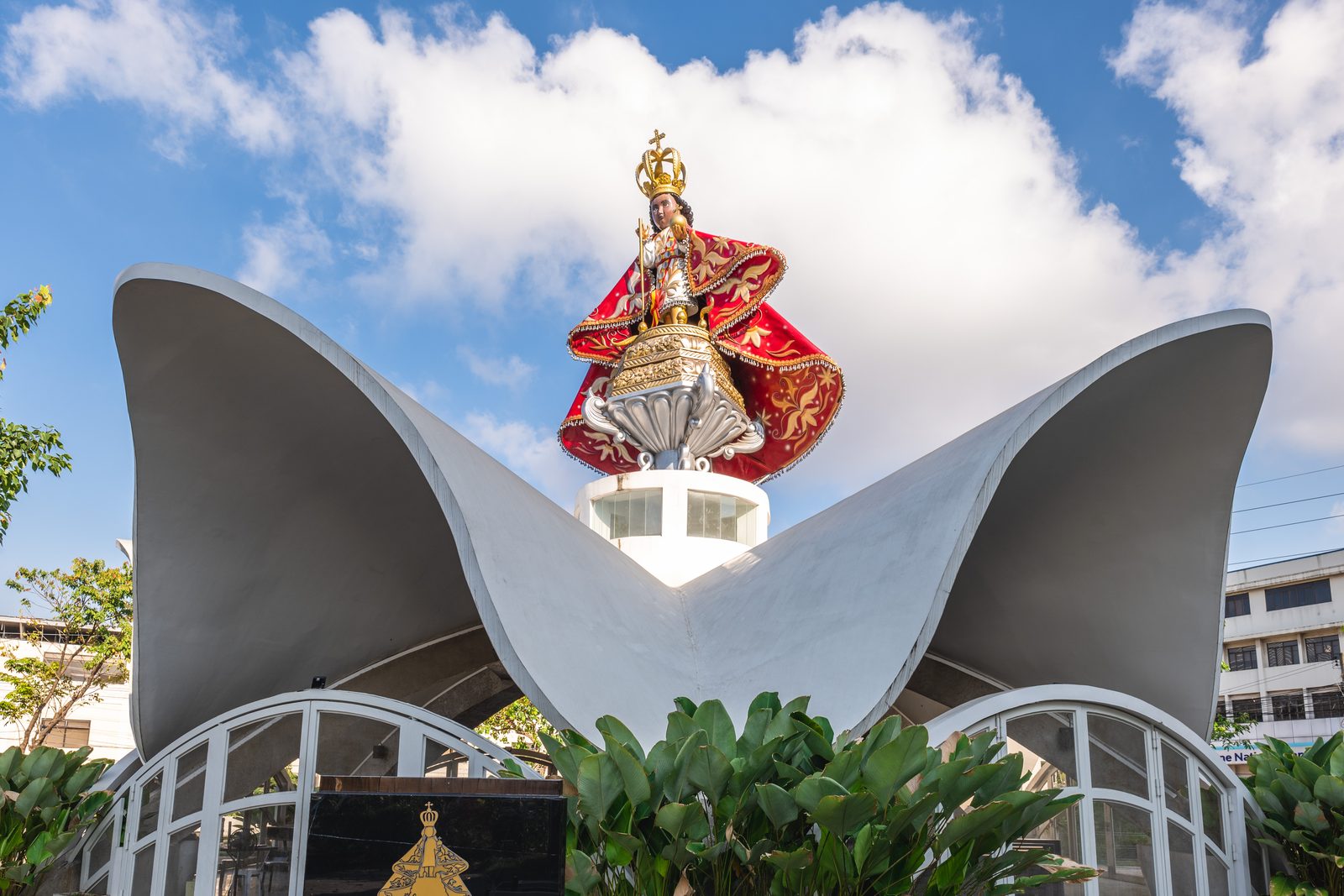
An image of the Santo Niño in red robes above the white sculptural candle shrine outside the basilica.

The Santo Niño, in glass

The Santo Niño is small. About thirty centimetres tall. Carved in Flanders sometime before 1500, given to Queen Juana of Cebu in April 1521, lost when the village burned, rediscovered in March 1565 by a Spanish soldier picking through the ash. The figure is dressed now in heavy embroidered robes, with a crown, and stands behind glass in a side chapel of the basilica. The chapel is busy. There is a queue most days. People light candles in the courtyard outside, in long ranks of red and yellow flames, and pass the figure asking for help with whatever they came to ask about. You can stand and watch this for as long as you want; nobody is timing the foreigners. The relic itself, behind the glass, is unremarkable to look at. The remarkableness is that it is still there, and that the queue has not ended in five hundred years.

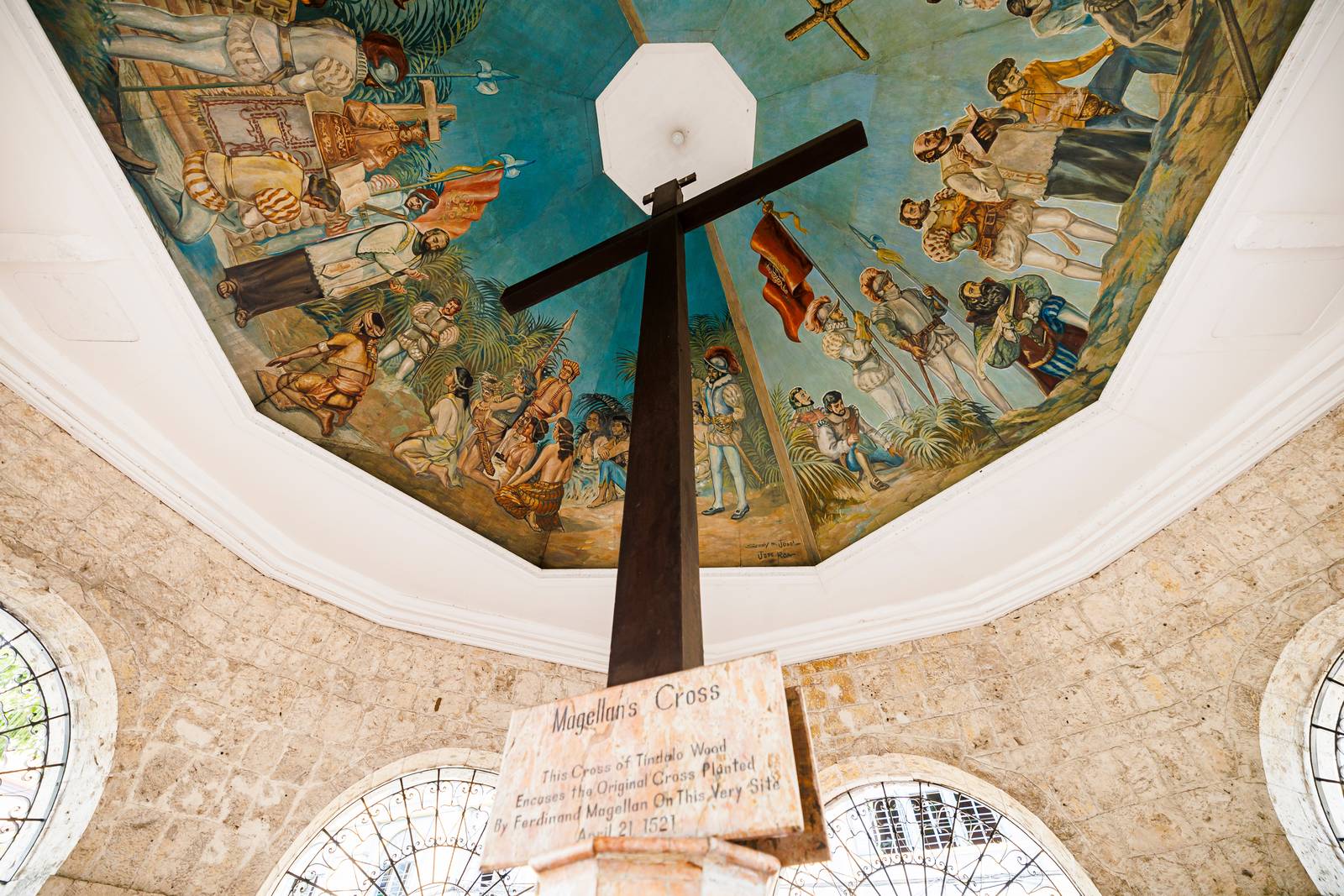
The dark tindalo cross inside Magellan’s Cross kiosk, the painted ceiling above it.

Magellan’s cross, in a kiosk

Twenty metres from the basilica entrance, in a separate octagonal kiosk on the main road, is the cross Magellan’s expedition planted. The original wood is encased inside a hollow tindalo cross, which means what you can see is a darker wooden shape inside a lighter wooden frame. The encasement is for protection. Pilgrims used to chip pieces off the original to take home as relics, and there was, by the late 1700s, very little cross left. The kiosk has a painted ceiling depicting the planting itself, faded, repainted twice. The cross is not theologically important and is not, strictly speaking, a relic. It is significant because it is where Magellan’s expedition stood five hundred years ago. The geography is the meaning.

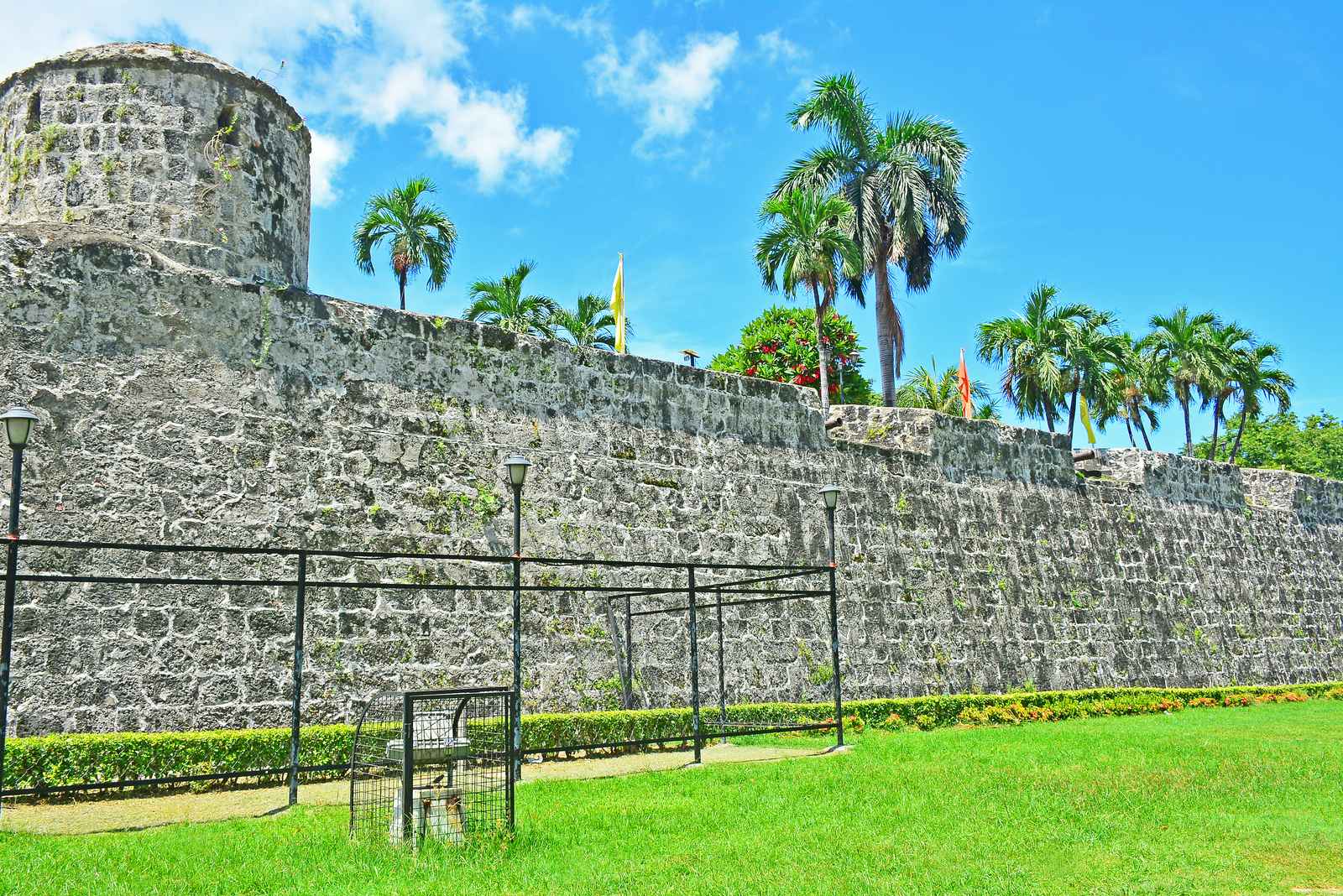
Fort San Pedro’s coral-stone walls under palms, lawn in the foreground.

Fort San Pedro at the edge of the city

Fort San Pedro is the smallest Spanish military fort in the Philippines, built in 1565 by Legazpi’s company, finished in stone over the next century. The walls are thick. The triangular footprint encloses about two thousand square metres. Inside, there is a small museum, a courtyard, and a row of cannons. The garden inside the walls is well kept. The fort sits on the harbour, at what was once the working edge of the city, and is now slightly shadowed by the modern port behind it. You climb the walls and look out toward Mactan. Lapu-Lapu killed Magellan on the far shore of that water, in waist-deep surf, with the expedition’s longboats unable to reach him in time. The Filipino who killed Magellan has a city named after him now, just across the bridge.

The days

  1. Day 01

    Arrival

    Landing at Mactan-Cebu airport, a short private transfer to Be Resort on the east coast of Mactan, fifteen to twenty minutes away. Standard check-in from 2pm. Afternoon free; the resort sits on its own small beach, and the city can wait until tomorrow.

  2. Day 02

    City and uphill

    A full day, joining a small group with a guide. Morning in the heritage core: Basilica del Santo Niño, Magellan’s Cross, the Cebu Heritage Monument, the Yap-Sandiego ancestral house, Fort San Pedro, Taboan dried-fish market. Afternoon up into the hills: Sirao Garden, the Temple of Leah, the Taoist temple, the 10,000 Roses Café, with a run down Colon Street on the way. Drop-off at SM City Cebu; own way back to the hotel (Grab and taxis are easy, about 45 minutes to Mactan).

  3. Day 03

    Out

    Breakfast at the hotel, then check-out (standard 12pm). Free time until the airport transfer. Standard transfer to Mactan-Cebu for departure.

From USD 339 per person · minimum 2 pax.

Lunch
Day 2 lunch is on your own during the tour. Cebu lechon is the famous answer, and we will tell you which house to go to depending on the day’s route.
Includes
Two nights at Be Resort Mactan. Private roundtrip airport transfers. Daily breakfast at the hotel. The Day 2 city and uphill tour with guide and admissions on the listed stops. All hotel taxes and surcharges. Travel insurance.
Accommodation
Be Resort Mactan, on the east coast of Mactan island. Beachfront, mid-tier, minutes from the airport; the old city is across the bridges.
Not included
International flights. All lunches and dinners. The ride back from SM City Cebu after the tour. Tips and gratuities. Extensions, arranged after booking, not at checkout.
Travel times
Mactan-Cebu airport to Be Resort: fifteen to twenty minutes. Hotel to the heritage core: 45 to 60 minutes depending on bridge traffic. The Day 2 tour runs roughly 8am to 5pm and ends at SM City Cebu.
When to come
December through May is dry and the light is best for the heritage walking. June through October is wet season; the tour still runs but the open-air stops feel different. The Sinulog festival (third weekend of January) is the country’s largest religious procession; the city doubles in population that week. Beautiful and crowded; book months ahead. Christmas and New Year dates are excluded from this rate; the booking calendar closes them.
Worth knowing
The Day 2 tour is a shared day: a small group, a guide, a set route. It is the right way to cover this much ground in one day; if you would rather have it private, write to us before booking. The Basilica is quieter on weekday mornings; photography is allowed in the courtyard but not in the chapel where the Santo Niño stands. We can extend with a ferry to Bohol (two hours) or a slower run down the south coast, arranged after booking, not at checkout.
Three days for Cebu is enough for the basilica, the fort, the Heritage Monument, and a beach morning on Mactan before the flight. We can extend to a Bohol leg (one ferry, two hours) or south along the coast if you’d like a fuller week. Ask us.

Have a question? Book this trip