My Philippines Trip
Start a letter
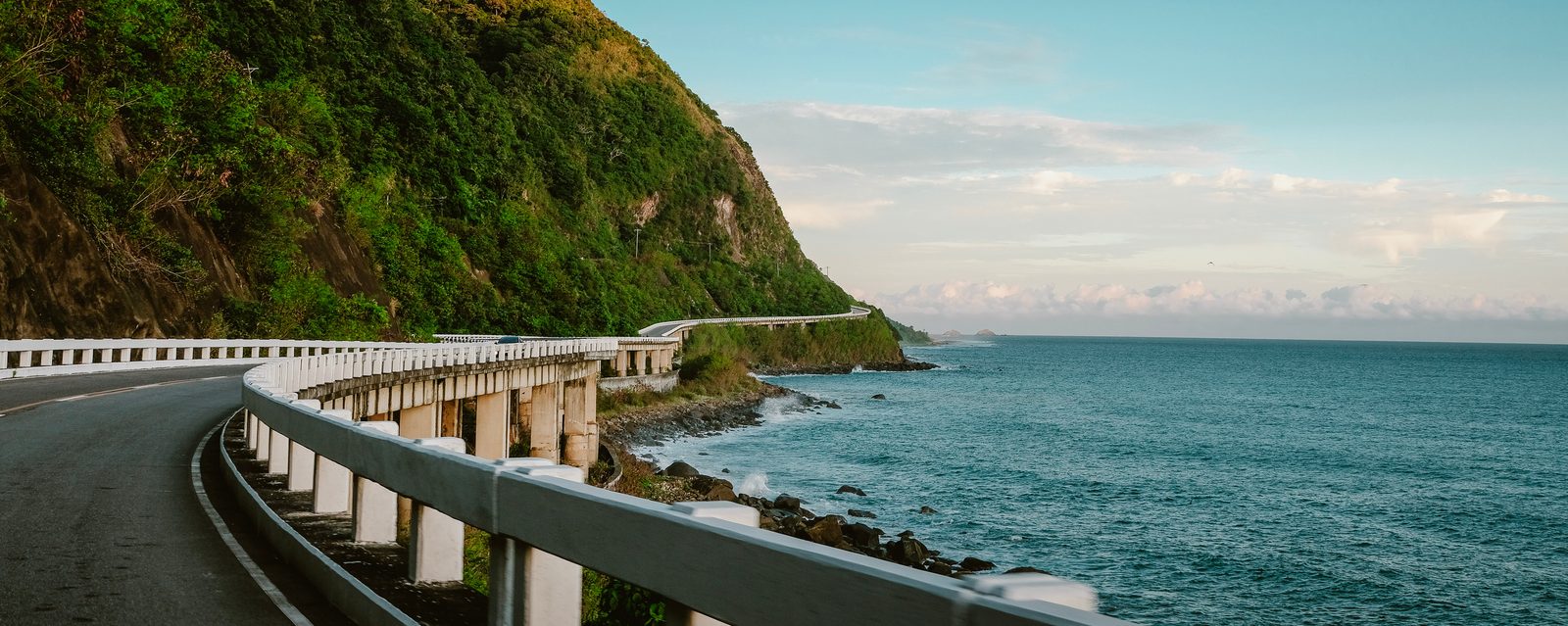
The Patapat viaduct curving along the Ilocos coast, sea on one side and green mountainside on the other.
Endurance / Wind and stone

Ilocos

The far north. The only trip we sell where the sea is not the point.

Ilocos is the long, dry, wind-scoured coast at the top of Luzon, and it looks like nowhere else in the country. The Spanish were here early and built to stay: churches with buttresses like fortress walls, a merchant town of cobbles and dark hardwood that never burned down, kilns that have been turning out the same black clay jars for two centuries. The weather is the other builder. It carved the Kapurpurawan rock white and smooth, piled the sand at Paoay into a small desert, and blows steadily enough that the ridge above Bangui carries a line of wind turbines along the shore.

The trip runs on wheels, which is the honest way to say it: a van, three days, and the coast unrolling through the windscreen between stops. Day one is Vigan, the merchant town, ending on Calle Crisologo as the day-trippers thin out. Day two goes to the top of the country: the Cape Bojeador lighthouse, Kapurpurawan, the Bangui windmills, the Patapat viaduct where the road hangs off the mountainside, and a swim at Saud Beach. Day three works back through Paoay: the lake, the presidential museums at the lake and at Batac, the sand dunes, and a last sunset at the Pangil rock formations in Currimao. Two nights at Sola Hotel in Laoag hold the middle.

After Palawan, and after every island on this site, Ilocos is the counter-argument: the Philippines with its shoes on. History that is walkable, weather you can see working, food built for appetite (the empanadas are orange, the bagnet is serious). It suits travellers who have done the boats and want the country’s other register. Bring a jacket for the wind and an appetite for the rest.

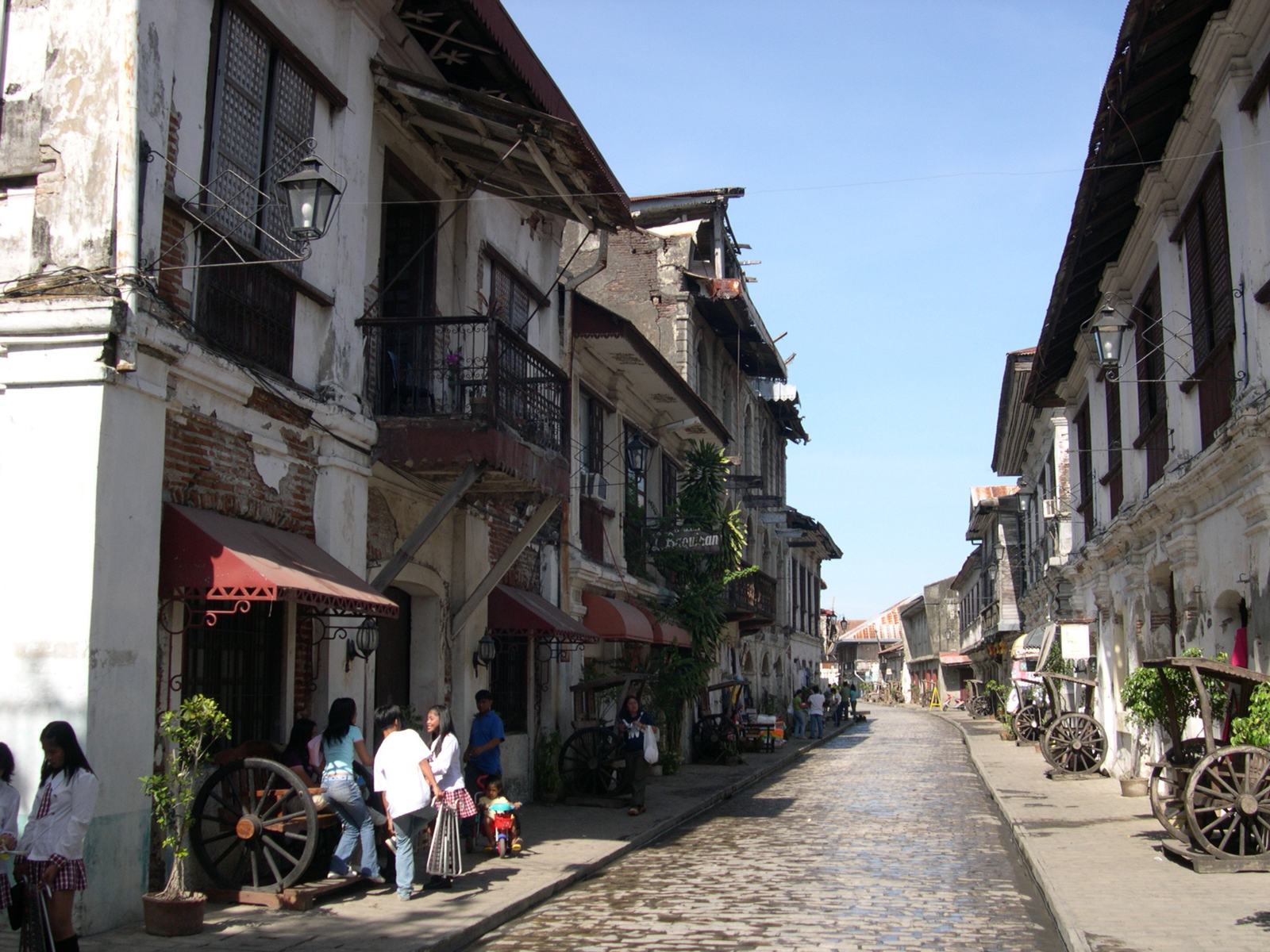
Calle Crisologo’s cobbles and ancestral houses in daylight, walkers in the shade of the eaves.

Calle Crisologo, after the buses

Calle Crisologo is four cobbled blocks of ancestral merchant houses in Vigan, built from brick, lime, and dark hardwood by Chinese-Ilocano trading families, and kept whole while nearly every other colonial town in the country burned, fell, or was bombed. By day it is busy. Come late afternoon the tour buses pull out, the kalesa horses slow to a walk, and the street returns to what it is: a corridor of deep eaves and capiz-shell windows with the light going amber on the stone. Buy a jar of Ilocos vinegar from a shop that has sold it for a hundred years. Walk the four blocks twice.

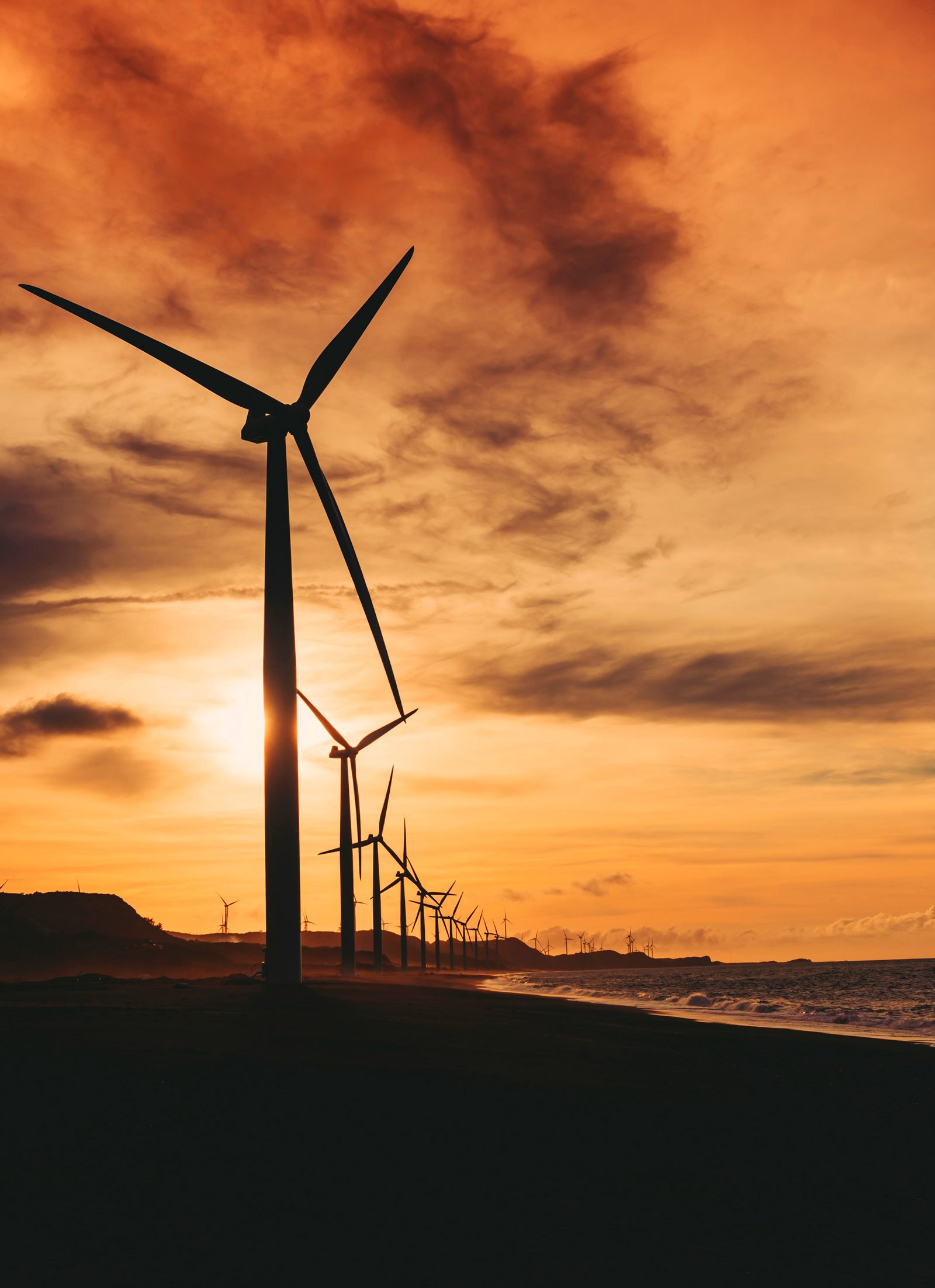
The Bangui windmills in silhouette along the shore at sunset.

The wind coast

Day two is a run along the top of the country, and the wind is the through-line. It turns the twenty turbines strung along the shore at Bangui, each one taller than anything else in the province. It carved Kapurpurawan, a formation of smooth white limestone rising off the shoreline like something poured rather than built. And it has kept the Cape Bojeador lighthouse in work since 1892, warning ships off a coast that has collected its share of them. Saud Beach, where the day stops for a swim, faces north into all of it; the water is clean and the sand is nearly white.

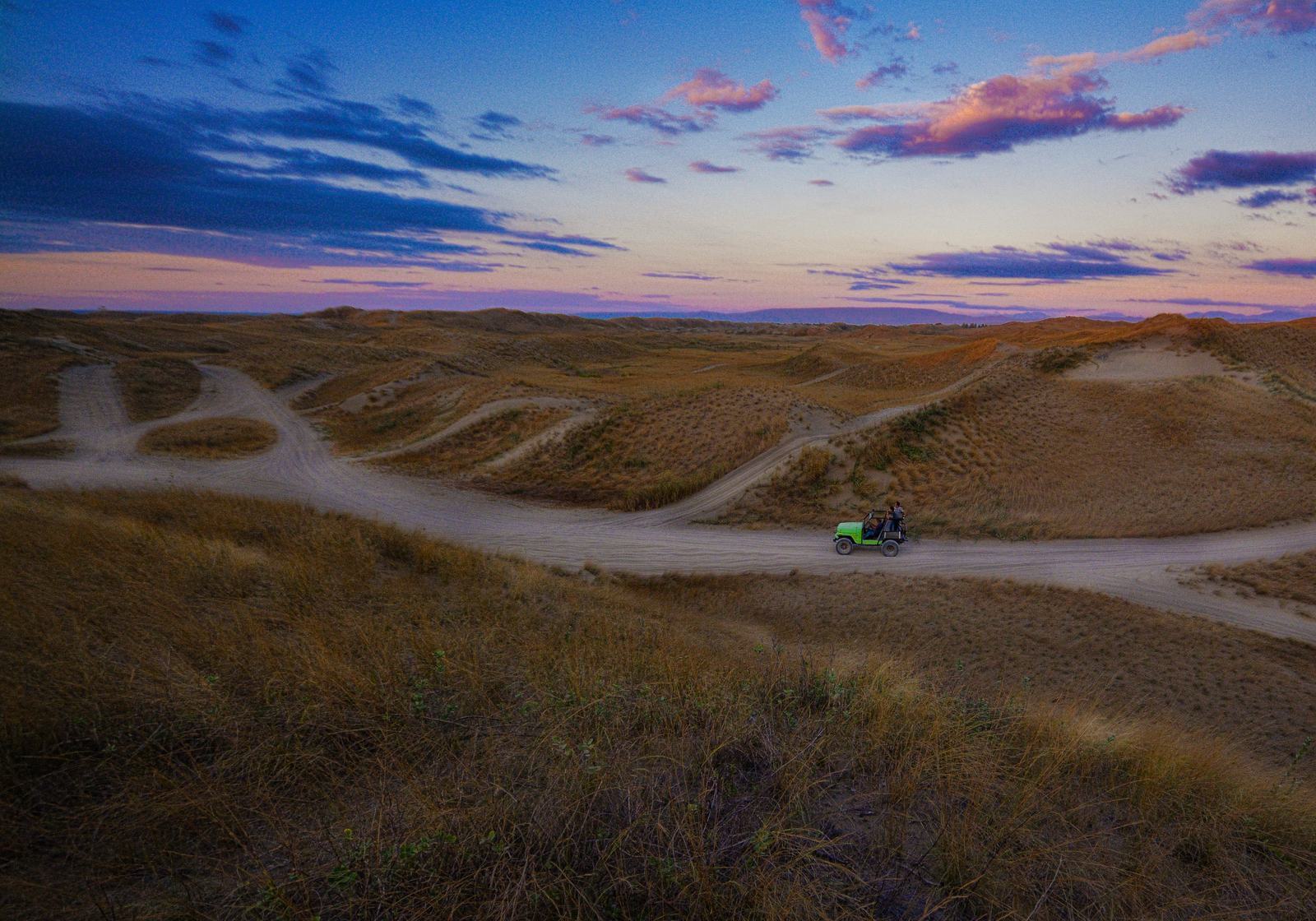
The La Paz sand dunes at dusk, a track winding through the ridges.

The dunes at Paoay

The La Paz sand dunes outside Paoay are an actual desert, eighty-odd square kilometres of it, pushed up by wind and sea over centuries and still moving. Films are shot here when a script needs somewhere that does not look like the Philippines. The tour brings you through on day three; there are 4x4 rides and sandboards for hire on the spot if you want the loud version, and the walk up the ridge if you want the quiet one. The day ends further down the coast, at the Pangil rock formations in Currimao, where the sun goes down into the sea and the trip closes properly.

The days

  1. Day 01

    Vigan

    Arrival, then straight into the south of the region: the Baluarte grounds, the Bantay bell tower, the pagburnayan jar makers (two hundred years of the same black clay, still thrown on foot-turned wheels), and the heritage core of Vigan: St Paul’s Cathedral, Plaza Salcedo, Plaza Burgos, the Crisologo Museum, and Calle Crisologo as the light goes. Then north to Laoag and check-in at Sola Hotel. Fly into Laoag in the morning; the day is built for it.

  2. Day 02

    The top of the country

    Breakfast, then north: the Cape Bojeador lighthouse, the Kapurpurawan rock formation, the Bangui windmills, the Pagudpud welcome arch, the Patapat viaduct, and a proper stop at Saud Beach for a swim. Back to Laoag by evening.

  3. Day 03

    Paoay, and out

    Breakfast and check-out, then the last circuit: Paoay Lake, Malacañang of the North (the Marcos family’s lakeside residence, kept as a museum), the Paoay sand dunes, the Marcos Presidential Museum at Batac, the Batac riverside, and sunset at the Pangil rock formations in Currimao. Departure follows, timed to your flight from Laoag or your road south.

From USD 479 per person · minimum 2 pax.

Lunch
All meals on your own except daily breakfast. This is the region to eat in: Vigan empanada off the plaza on day one, bagnet or pinakbet wherever the guide swears by on days two and three. Cheap, serious food.
Includes
Two nights at Sola Hotel or similar in Laoag. The van and driver throughout. The three-day tour across Vigan, Pagudpud, and the Paoay circuit with a DOT-accredited guide. Entrance fees and the environmental fee. Daily breakfast. Travel insurance.
Accommodation
Sola Hotel or similar, Laoag. Modern, clean, central. A base, not a resort.
Not included
Flights (Manila to Laoag is about seventy minutes; there is no direct international service). All lunches and dinners. The 4x4 and sandboard hire at the dunes, paid on the spot if you want them. Tips for the driver and guide. Getting to Ilocos by land from Manila, which can be arranged after booking if you would rather drive up.
Travel times
Laoag to Vigan: about two hours each way. Laoag to the Pagudpud stretch: about ninety minutes before the stops begin. This is a van trip; expect three to four hours of driving on each of the first two days, broken by the coast. Manila to Laoag by air: about seventy minutes.
When to come
November through February is the season: cool, dry, and windy, with the turbines turning and the dunes bearable underfoot. March through May is hot; the dunes at midday are genuinely punishing, which the itinerary avoids. June through October is wet, and this coast takes typhoons directly; we would steer you elsewhere in those months.
Worth knowing
The distances are the trip; treat the van time as viewing time, because it is. Fly into Laoag in the morning of day one or the Vigan day shortens from the front. Two stops on day three, Malacañang of the North and the Marcos museum at Batac, are part of every Ilocos itinerary; go with your own reading of the history. Tell us your departure flight when you book and the last day is shaped around it.


Three days is the honest minimum for Ilocos, and this route spends them well: the town, the coast, the sand. If the far north takes hold of you, the road south passes Vigan again and can pass more; a longer run gets arranged after booking, not at checkout. Ask us.

Have a question? Book this trip