My Philippines Trip
Start a letter
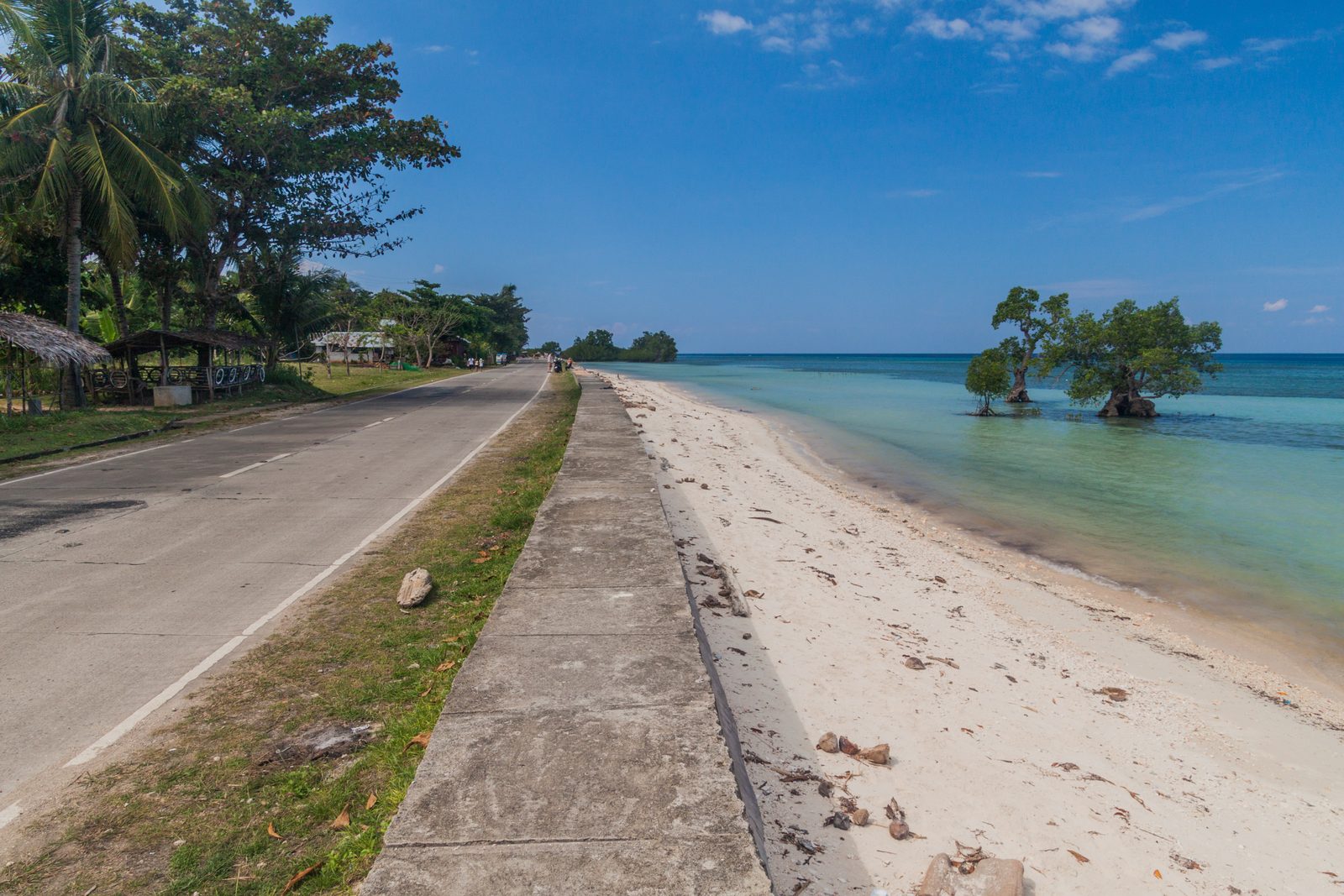
A quiet coastal road on Siquijor, white sand and turquoise shallows alongside.
Folklore / Fresh water

Siquijor

The island the rest of the country tells stories about. The water is the true part.

Siquijor is a small island of about a hundred thousand people, ringed by a coastal road you can drive in a day and crossed by an interior of limestone hills and springs. It has a reputation, partly earned and partly cultivated, for folk healing and sorcery: the healers are real, the potions are sold at the market, and every Holy Week the island hosts a gathering of mananambal that has run for generations. You can take as much or as little of this as you like. What needs no belief at all is the fresh water. The island is stitched with it: spring-fed falls, a cave river, tiered pools the colour of bottle glass.

The trip crosses from Dumaguete, which is how everyone crosses: a short transfer from the airport to the pier, then the Ocean Jet fast craft over the strait, about an hour, with Siquijor filling the window for the second half. You stay three nights at Gold View Beach on the island. Day two is the working day, a guided run through the interior: Lugnason Falls, the Sambulawon underground river, Laga-an Falls, a sitting with a Bolo Bolo healer, the tiers at Cambugahay, and the old balete tree with its fish pool. Day three is deliberately empty. Day four is the ferry back and the flight.

After Palawan, what Siquijor offers is a smaller and stranger island. Palawan’s drama is geological. Siquijor’s is cultural, and it sits lightly: a healer who works with a straw and a glass of water, a tree older than the town beside it, a waterfall with a rope swing and a queue of local teenagers using it properly. The free day is not filler. It is the point. The island rewards having nowhere to be.

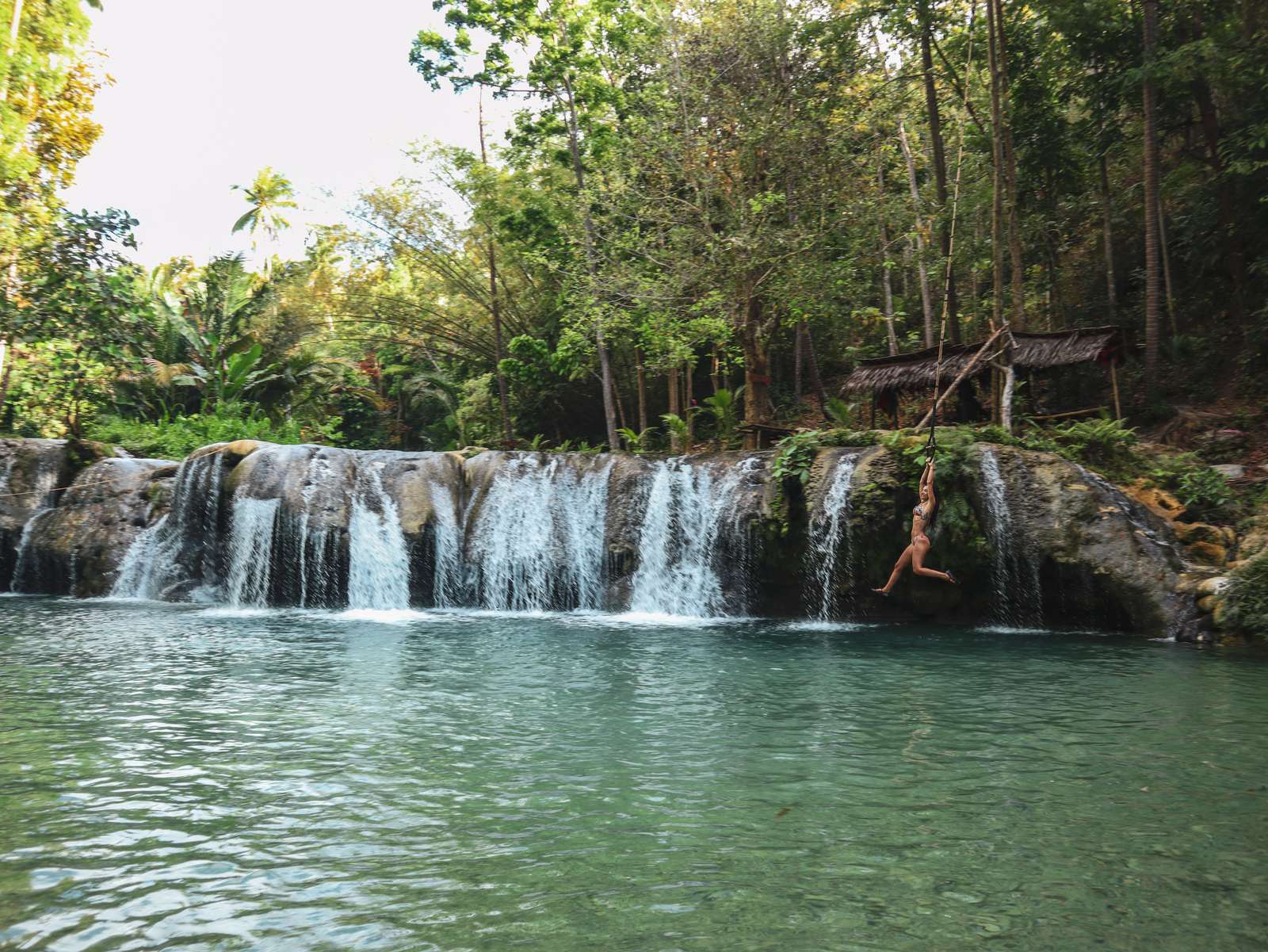
Cambugahay Falls: a swimmer mid-air over the green pool, tiers of spring water behind.

Cambugahay, in the morning

Cambugahay Falls is three tiers of spring water in the interior above Lazi, each tier pooling wide enough to swim, the colour somewhere between green and blue depending on the light. There are rope swings on the main tier, run by local operators for a small fee per go, and by late morning there is a happy crowd using them. The water is cold, clear, and moving just enough. The walk down is a flight of a hundred-odd steps; the walk back up is the price of the swim, paid slowly.

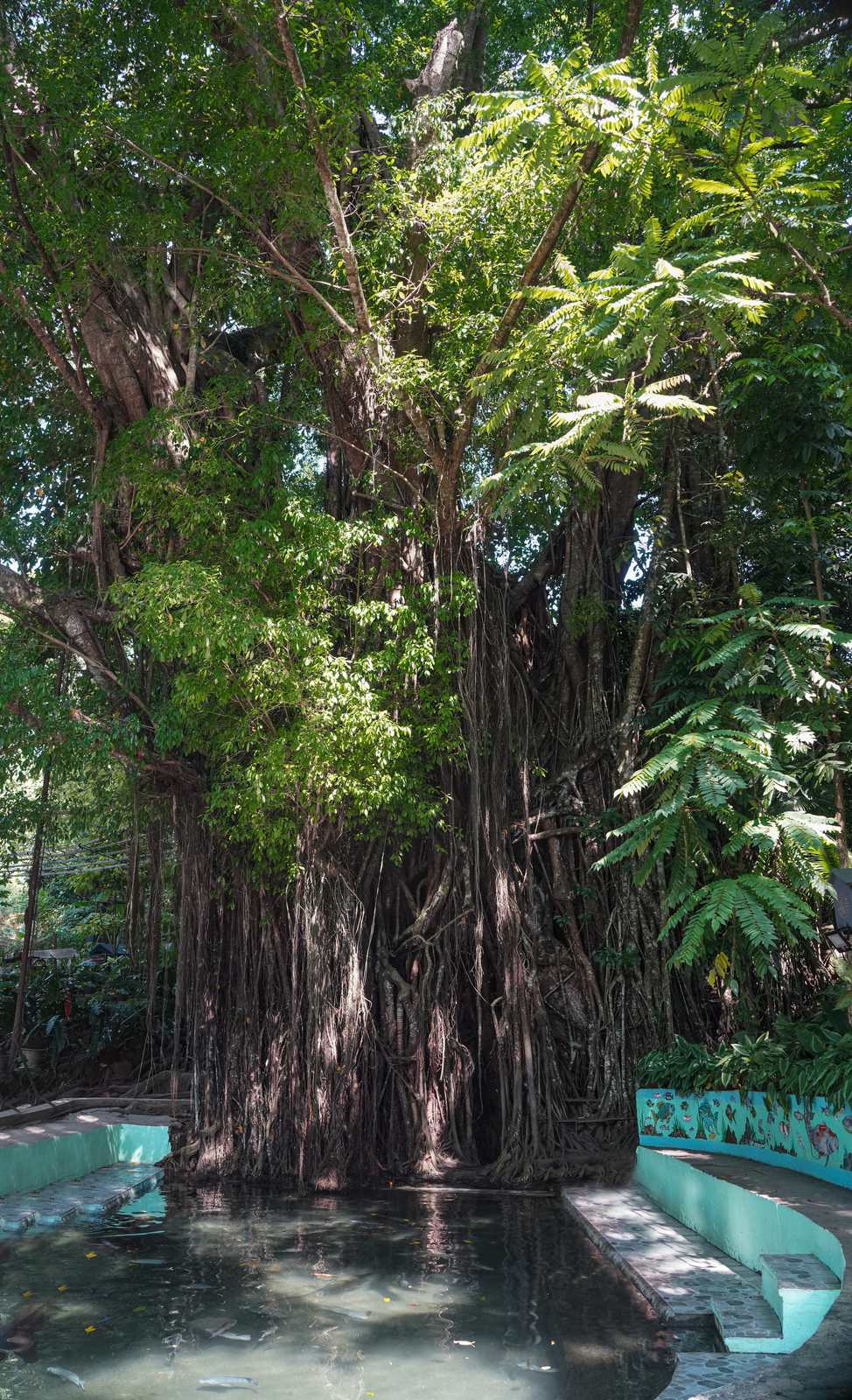
The old balete tree at Lazi above its spring-fed pool, roots curtaining down to the water.

The old balete, and its pool

The Old Enchanted Balete Tree in Lazi is genuinely four hundred years old, give or take, and is a banyan rather than a balete in the strict botanical sense, but the local naming is what counts. At the base of the tree is a small freshwater pool fed by spring water, and in the pool live small fish that nibble dead skin from the feet of anyone who sits on the edge with their feet in the water. The fish spa is, technically, a tourist attraction. The tree itself is something else: roots dropping like ropes from twenty metres up, the trunk wider than three people standing arm-to-arm, bark that has been touched smooth by hands across centuries. You will not believe the age of the tree until you see it. You will believe it after.

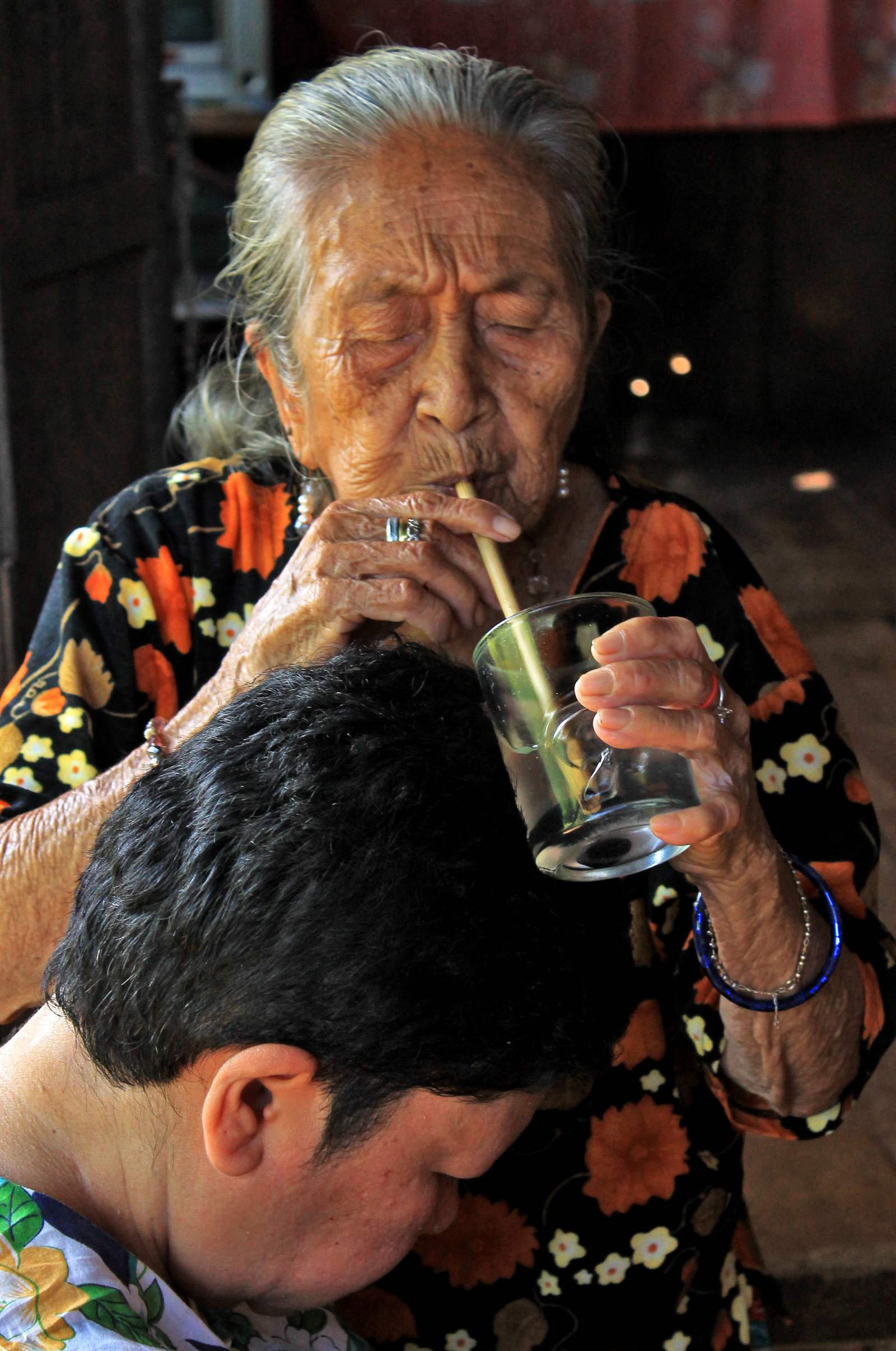
A Bolo Bolo healer blowing through a bamboo straw into a glass of water over a bowed visitor.

Bolo Bolo, taken seriously

The Bolo Bolo healers work with three things: a drinking glass of water, a bamboo straw, and a small black stone. The healer blows through the straw into the glass while passing it over you, and the water clouds; the clouding is read as the sickness leaving. Whether you believe this is your business, and nobody on the island will press you either way. What is worth taking seriously is the tradition itself, which is old, local, and offered without theatre. A donation at the end is the custom. Sit, be still for ten minutes, and let the island introduce itself properly.

The days

  1. Day 01

    Across

    Landing at Dumaguete airport, met and transferred to the pier, then the Ocean Jet fast craft across to Siquijor, about an hour. Met again at the port and driven to Gold View Beach for check-in. The rest of the day is yours; the water in front of the resort is the right introduction.

  2. Day 02

    The mountain day

    Breakfast, then a full guided day in the interior: Lugnason Falls, the Sambulawon underground river, Laga-an Falls, a sitting with a Bolo Bolo healer, the Cambugahay tiers, and the old balete tree with its fish pool. Bottled water in the van; entrance fees covered. Bring water shoes if you have them.

  3. Day 03

    Empty, on purpose

    Nothing scheduled. Sleep late, take a tricycle to Paliton Beach for the afternoon, or stay exactly where you are. If you want more, say so the day before and something can be arranged.

  4. Day 04

    Out

    Breakfast at the hotel, check-out, then the ferry back to Dumaguete and the transfer to the airport for departure.

From USD 399 per person · minimum 2 pax.

Lunch
All meals on your own except daily breakfast. On the mountain day the tour passes small eateries; your driver knows which ones are worth the stop. Bring small bills.
Includes
Three nights at Gold View Beach Resort. Roundtrip transfers between Dumaguete airport, the piers, and the hotel. Roundtrip Ocean Jet ferry tickets. Daily breakfast. The full-day mountain tour with all applicable entrance fees. Guided by your drivers, who know the island properly. Bottled water on the tour.
Accommodation
Gold View Beach Resort, on Siquijor. Beachfront, simple, well kept; the island does not do luxury, and is better for it.
Not included
Flights. Lunches and dinners. Travel insurance. The Siquijor tourist fee (PHP 50, cash on arrival). Donations to the Bolo Bolo healer, which are the custom. The rope-swing operators and the private guide at Cambugahay, both small and paid on the spot. Tips for the drivers. The optional Catabon Cave trip, arranged after booking, not at checkout.
Travel times
Dumaguete airport to the pier: about twenty minutes. The Ocean Jet crossing: about an hour. The mountain day runs six to seven hours door to door. Nothing on Siquijor is more than an hour from anything else.
When to come
February through May is dry: the falls run lower but clearer, and the sea crossing is calm. June through October the falls are fuller and the afternoons wetter. Holy Week is the island at its most itself, when the healers gather for the annual festival; it is also the busiest week of the year, so book far ahead.
Worth knowing
The drivers are the guides here, and it works; this is an island where the man driving grew up two villages from everything he is showing you. Carry cash: the tourist fee, the swing operators, the healer’s donation, and most lunches are cash matters. The free day is deliberate; Paliton Beach at sunset is the standing recommendation.


Four days is the right length for an island this size: one to arrive, one to work, one to waste well, one to leave. If you want Dumaguete or Apo Island bolted on either side, that gets arranged after booking, not at checkout. Ask us.

Have a question? Book this trip